No items found.
AI
Jan 30, 2024

Learn how enterprises use agentic AI, why traditional CX approaches fail, and how production-grade architectures improve reliability, speed, and trust.
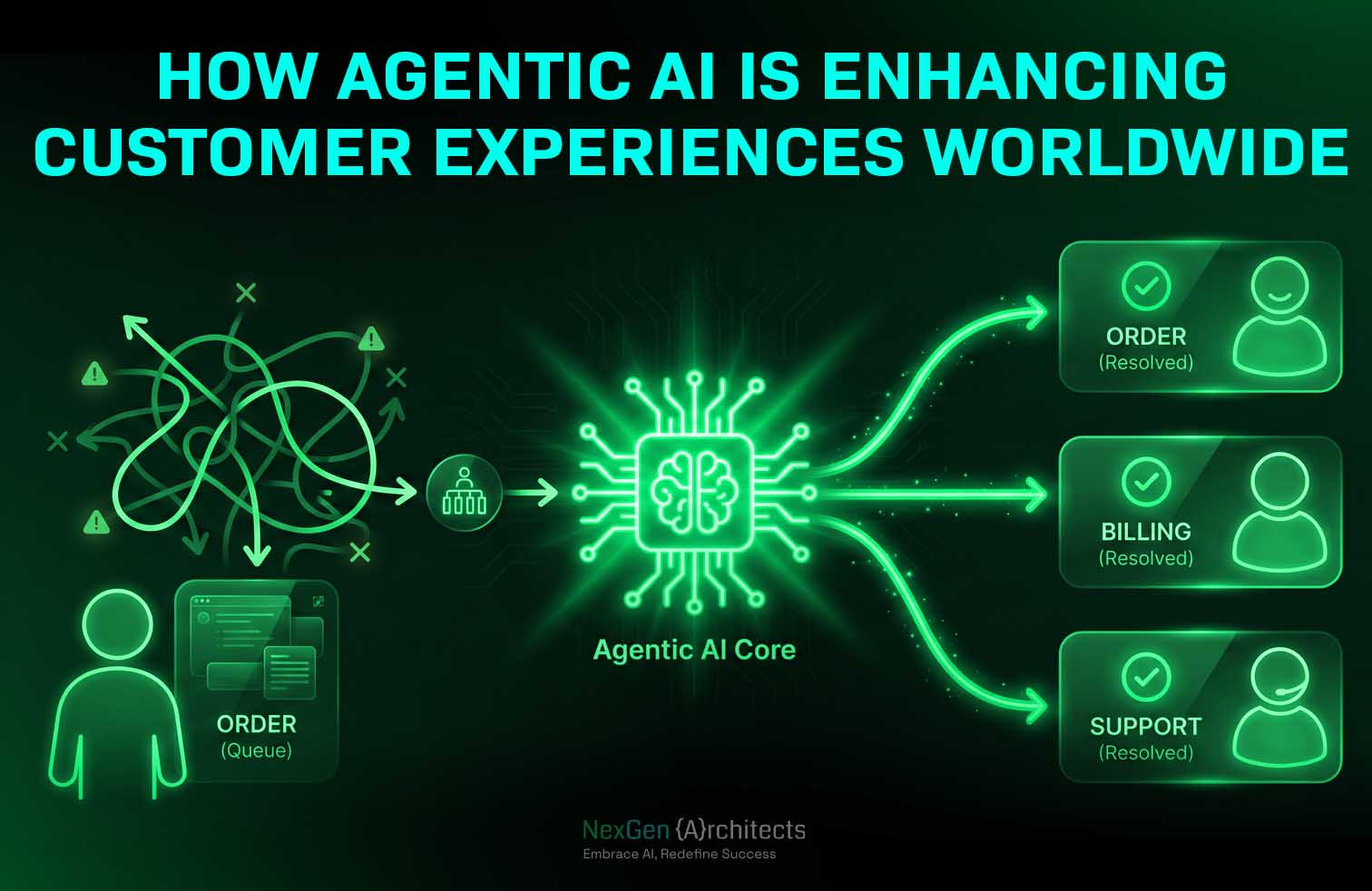
Customer experience has become the most visible failure point of enterprise IT. Not because companies lack data, channels, or tools but because execution still depends on brittle workflows and human coordination across fragmented systems.
For the last decade, enterprises invested heavily in:
Yet customers still face delays, repeated explanations, and inconsistent outcomes. The core issue is structural: systems respond, but they do not act with ownership.
Agentic AI introduces a fundamentally different operating model. Instead of answering queries or routing tickets, agentic systems take responsibility for resolving intent. They reason over context, invoke enterprise actions, validate outcomes, and adapt when conditions change. This shift, not better conversation, is what is materially improving customer experience worldwide.
Most enterprises already capture customer intent accurately. The failure happens after intent is known.
A customer requesting a refund, service change, or delivery update typically triggers:
This creates a multi-step, human-dependent execution chain. Delays are not caused by lack of intelligence but by lack of coordinated action.
Agentic AI directly addresses this execution gap by introducing systems that can:
From the customer’s perspective, experience is defined by time to resolution and consistency, not by how intelligent the interface sounds. Agentic AI shortens resolution paths and reduces variability by removing unnecessary handoffs.
Agentic AI refers to AI systems designed to operate as goal-driven actors rather than passive responders. An agent perceives context, reasons about constraints, executes actions using tools or APIs, evaluates outcomes, and iterates until objectives are met or escalation is required.
In customer experience contexts, this means the AI system:
Unlike traditional automation, agentic AI is stateful, adaptive, and outcome-oriented.
Workflow engines assume predictable paths. Customer journeys are anything but predictable.
As exceptions accumulate, enterprises respond by:
This creates automation debt. Systems become harder to maintain and less resilient over time.
Most enterprise chatbots stop at:
They lack authority, context, and reasoning loops required to complete work. As a result, they reduce front-line load but do not materially improve customer outcomes.
Many organizations deploy churn prediction, sentiment analysis, or intent classification models. These identify problems but do not solve them.
Prediction without action simply shifts responsibility back to humans.
Cause → Effect → Outcome
Cause: Intelligence is disconnected from execution
Effect: Humans remain the integration layer
Outcome: Slow, inconsistent customer experience
Agentic systems are designed to take responsibility for outcomes. Once intent is understood, the agent drives resolution forward without waiting for manual intervention.
This includes:
This single change of ownership eliminates most CX friction.
Agentic AI reasons across:
This allows decisions to be situational rather than scripted. The same intent may produce different actions depending on context, which is precisely how experienced human agents operate.
In mature implementations, agents act before customers complain. They detect early warning signals and initiate corrective workflows automatically.
Examples include:
This transforms CX from reactive support to proactive service reliability.
How Leading Enterprises Implement Agentic CX Architectures
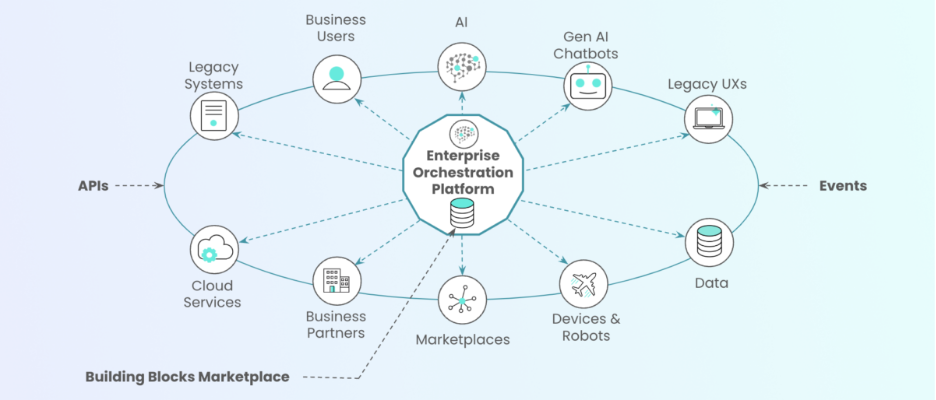
Successful agentic CX implementations consistently follow a layered architectural model.
This layer ingests signals from:
Its role is to construct a reliable situational picture.
This is where intent is translated into plans. Agents evaluate goals, constraints, and trade-offs before deciding what actions to take.
Platforms such as Salesforce Agentforce operate in this layer by combining reasoning with enterprise context and trust controls.
Agents must be able to act. This requires secure, governed access to enterprise systems via APIs.
This is where MuleSoft becomes foundational. Without reliable integration, agentic intelligence cannot translate into outcomes.
Mature systems embed:
Traditional approach:
A chatbot captures the dispute, creates a ticket, and hands it off to operations. Resolution depends on human coordination across systems.
Agentic approach:
The agent validates transaction history, checks policy eligibility, executes reversals or explanations, and updates audit systems automatically.
Result: Resolution time drops from days to minutes, with fewer escalations.
Traditional approach:
Customers report issues. Support teams investigate manually using monitoring tools.
Agentic approach:
Agents correlate telemetry, identify impacted customers, trigger remediation workflows, and proactively notify users.
Result: Lower inbound volume and higher perceived reliability.
Traditional approach:
Delayed shipment triggers customer inquiry and manual resolution.
Agentic approach:
Agents detect carrier failures, initiate alternative fulfillment, and update customers before they reach out.
Result: CX shifts from reactive apology to proactive reliability.
Many failures are conceptual like:
These mistakes create impressive demos but fragile production systems.
Organizations succeeding with agentic CX share common behaviors:
Customer experience stabilizes when intelligence, authority, and accountability converge.
Agentic AI enhances customer experience not by sounding human, but by behaving responsibly. It closes the execution gap between intent and resolution by embedding intelligence directly into enterprise operations.
Organizations that treat agentic AI as core infrastructure are seeing faster resolutions, fewer escalations, and more predictable customer outcomes. Those that focus only on conversational polish will continue optimizing interactions while customers wait for results.
In customer experience, autonomy is no longer optional. It is the new reliability layer.
.svg)

